CoDIFY • FMCG conglomerate (NDA) • 2025
Proving a poster reached the shop, with a QR code the shop already had
Once a poster left the warehouse, nobody could say whether it reached the shop it was meant for. CoDIFY is a QR-based verification system that answers that one question, using a QR code every shop already had.
Situation
Marketing material vanished after the warehouse
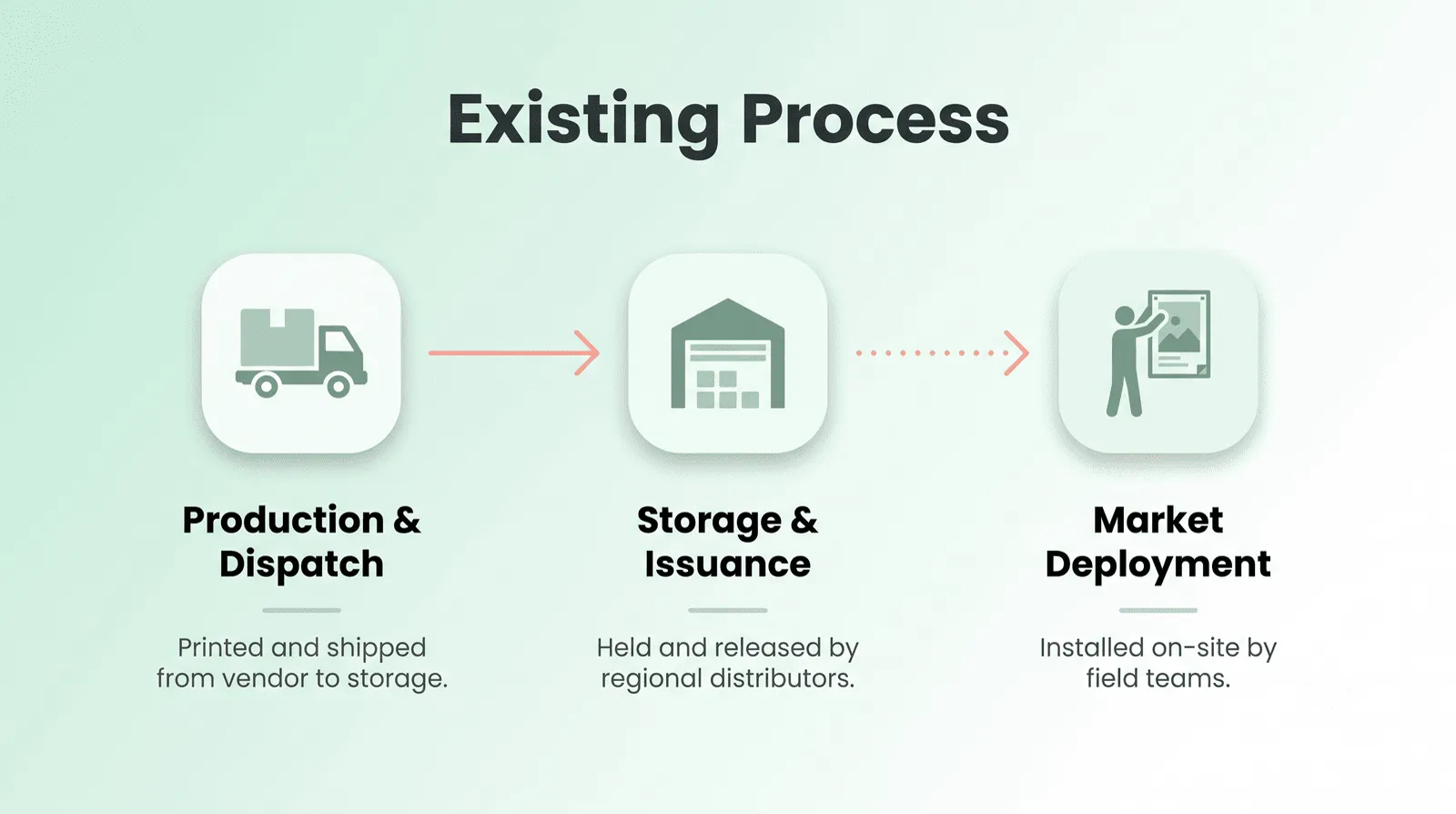
Printed by a vendor, held by a distributor, installed by a field team. Nothing was verified after step two.
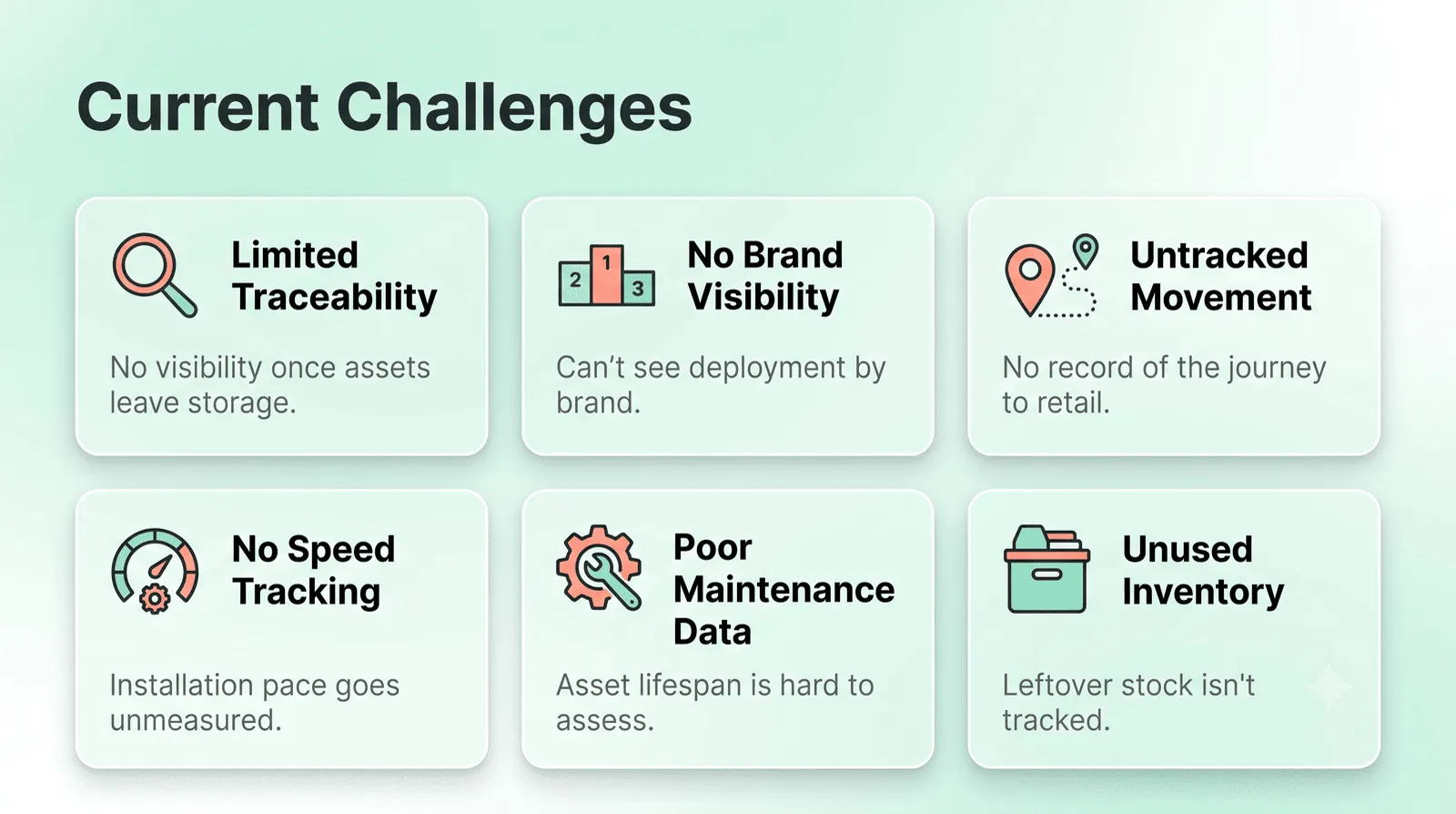
POSM (point-of-sale marketing material) passed through many hands. Deployment reports were built on manual claims, and unused stock sat untracked at distributors.
Task
Prove an install, in two weeks, with no new hardware
- Confirm a poster is in the right shop
- Hard to fake from a distance
- Nothing new to install in shops
- Design and build in about two weeks
I designed the scan flow, the field app screens and the dashboard, working with one developer.
Action
The first version was fooled on day one
1. One QR code was not proof
Version one asked people to scan a QR code printed on the poster. Right after the first print run, the dashboard showed ten posters deployed. All ten were still in inventory. A code anyone can scan from anywhere proves nothing.
- 10posters marked "deployed" by version one
- 0of them had actually left inventory
2. Borrowed a QR code the shop already had
Mid-brainstorm, someone paid for snacks with UPI. These posters could only be displayed at licensed retail points, and every one of those shops already had a registered UPI payment QR. Verification did not need new infrastructure. It could borrow one that existed.

The shop's own payment QR becomes its identity.
3. Two scans, one place, one moment
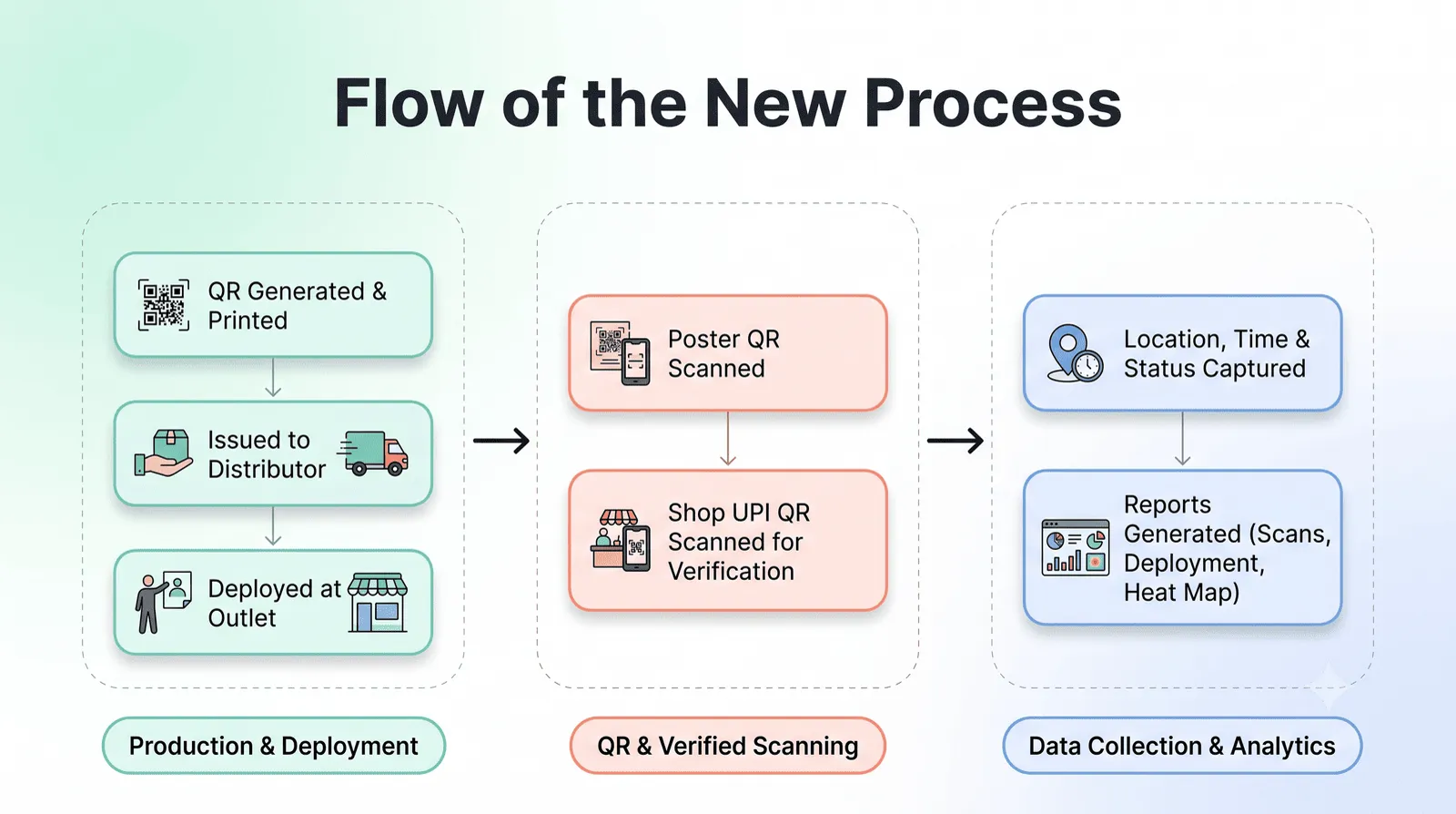
I designed the install flow as two scans that have to agree.
- 1Scan the posterThe QR printed on the material.
- 2Scan the shopThe shop's own UPI QR.
- 3Check place and timeLocation must match, within a tight time window.
- 4VerifiedOnly then is the install counted.
4. Gave the client a view they never had
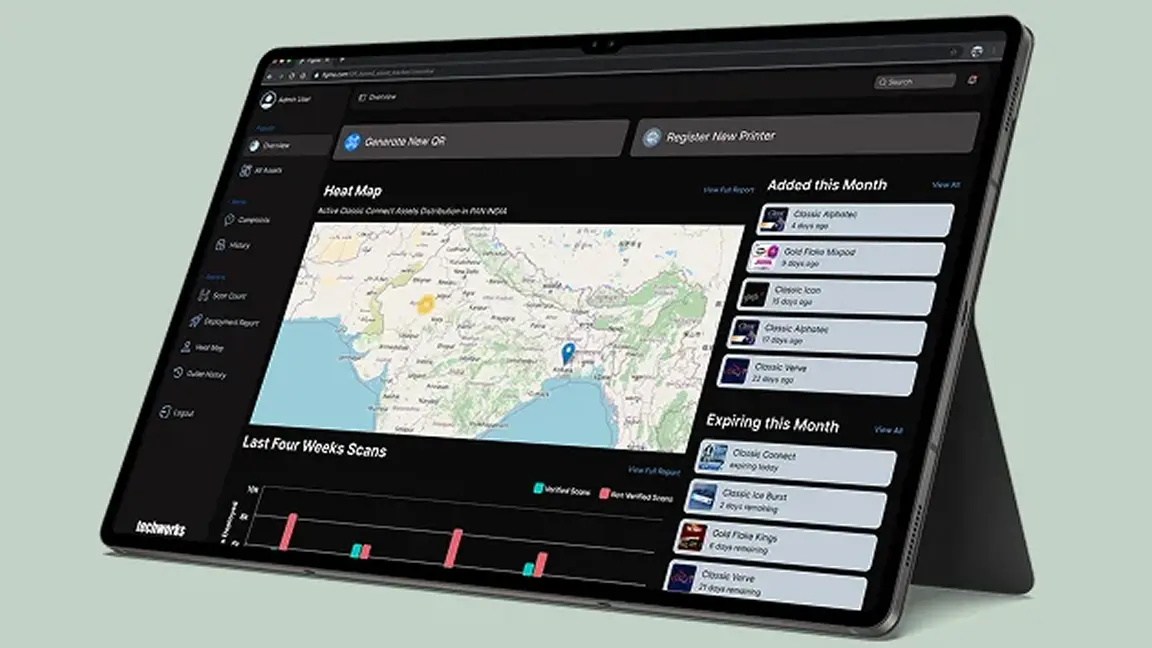
The dashboard shows scan counts, a deployment report, a heat map and outlet-level history, by brand and region.
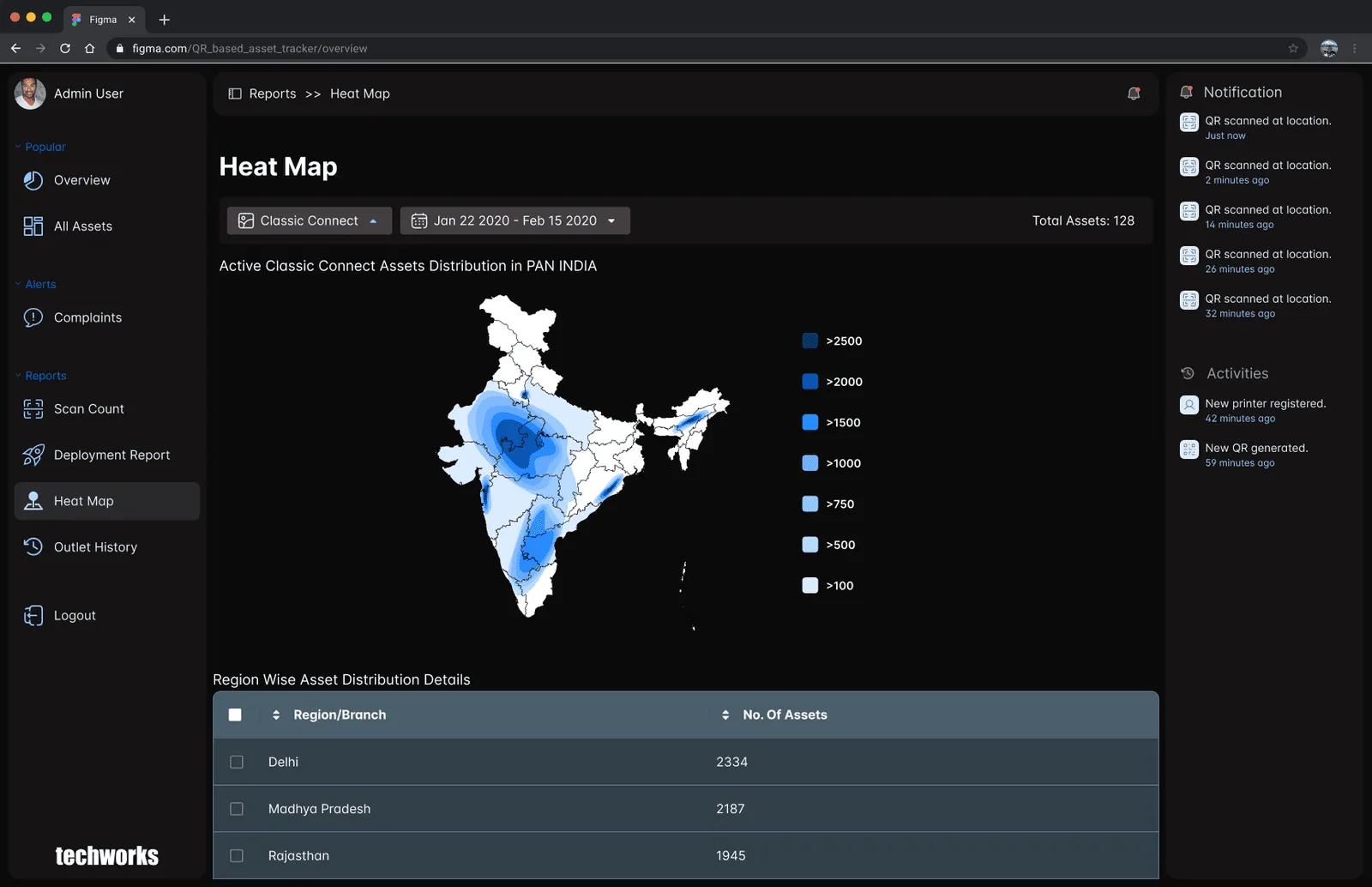
Where the material actually is.
Result
The verification held, and showed where the stock really was
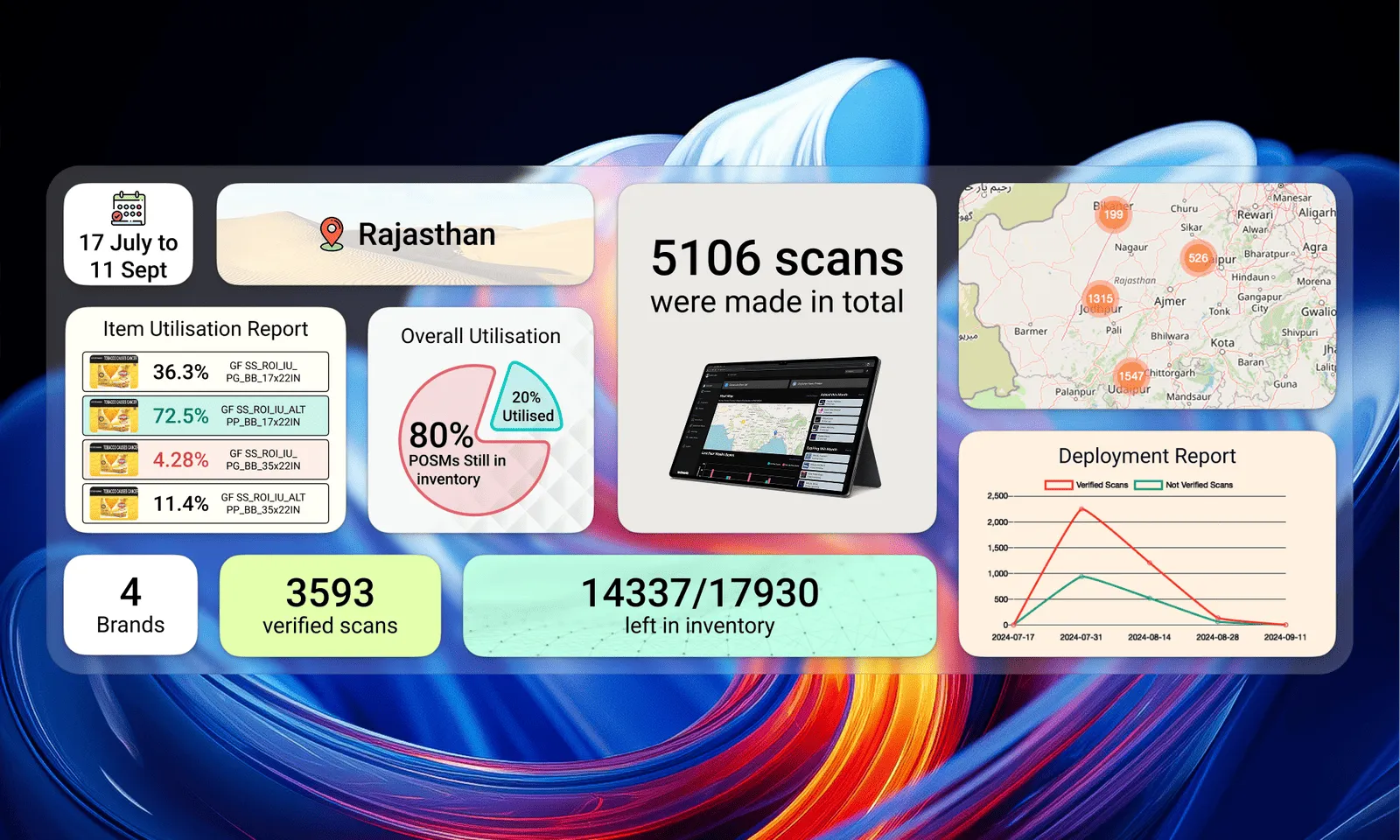
The Rajasthan pilot, 17 July to 11 September.
- 5,106scans across four brands
- 3,593verified installs, about 70% of scans
- 20%of issued material confirmed in shops; the rest was still in inventory
- 1,547scans in Jodhpur, the densest cluster
The low utilisation figure was the point. For the first time the client could tell a poster on a wall from one in a warehouse, and scans could no longer be faked from a distance.
Reflection
What I would do next
- 1Plan for no signalSome shops have poor coverage. I would let the app queue a scan and verify once it reconnects.
- 2Test the flow in a shop firstThe loophole showed up after printing. A day of field testing before the print run would have caught it.
- 3Keep borrowingThe best part of this project was not designing something new. It was noticing what was already on the counter.